
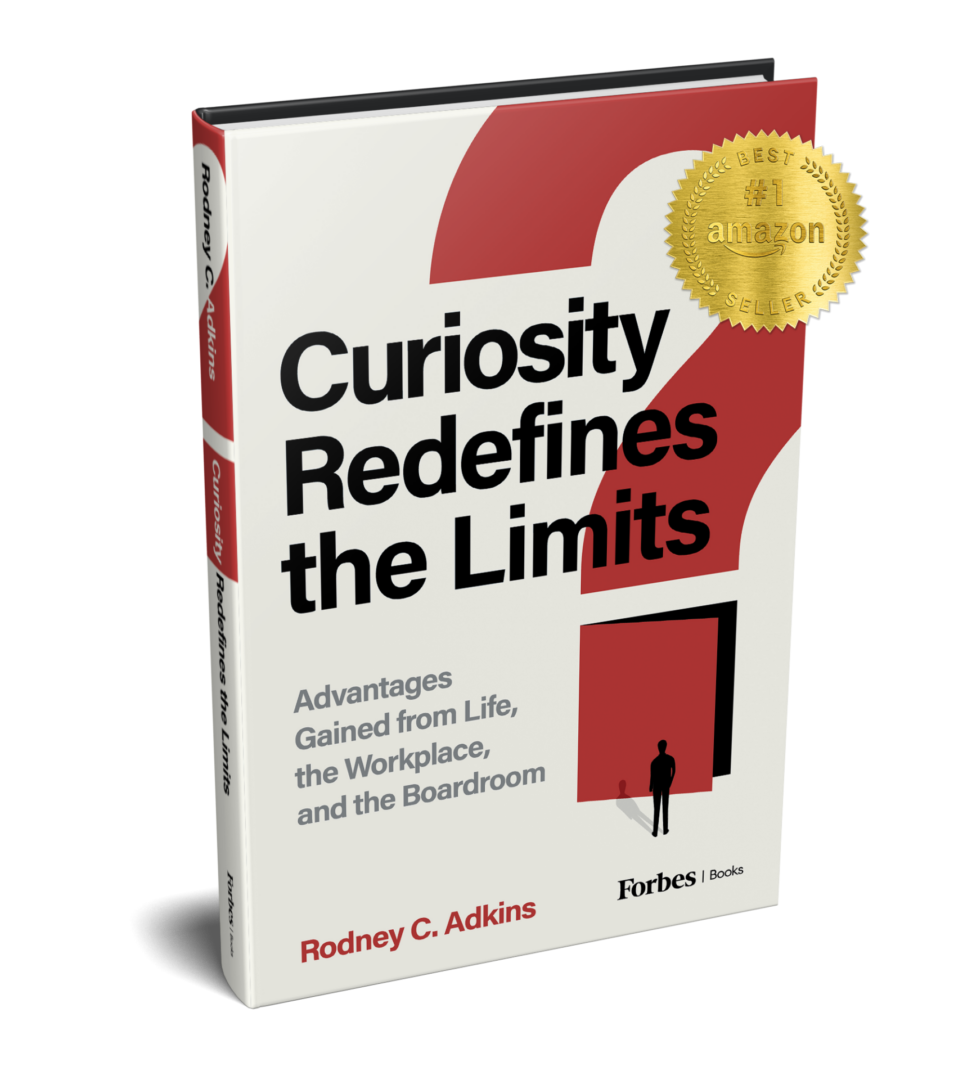
What is the Curiosity Advantage?
Originally published in Forbes Book Author Post, January 2026(opens in new tab)
Have you wondered why some people are more curious than others? Those who tend to be more curious appear to have more going on in their lives and careers. Perhaps curiosity is a natural trait for some, while for others it can be an acquired attribute best nurtured continuously. Some studies suggest(opens in new tab) that biological, psychological, and/or environmental factors can influence the source of curiosity.
Whatever the case, those who use this attribute will likely be advantaged in terms of personal and professional opportunities. Jokingly, I have come to accept that the source of my curiosity is biological, but environmental factors have heavily influenced it. I was born two months premature, a “premie,” and the joke is that I needed to see and explore the world as soon as possible. I grew up asking questions constantly, and I haven’t stopped to this day, asking, “Why?” or “How?” or, my favorite, “What if?”
Balancing Curiosity and Convenience
Curiosity has been the driving force behind our evolution, catalyzing discovery, innovation, and ongoing learning. Driven by our curiosity, we continually innovate and make advancements in addressing global challenges and enhancing lifestyle improvements, transforming how we work and live. On the one hand, some technological advances have diluted our level of curiosity. We’re allowing the power of innovation to make it very convenient for us to automatically accept the responses from internet search queries, with the use of tools like ChatGPT and the information we consume from social media applications, versus taking the additional time and steps to better understand by digging a bit deeper. On the other hand, if these innovations are used wisely as a co-pilot, the advantages in learning and understanding will be immeasurable.
The Three Advantages of Curiosity
Curiosity, or staying intellectually engaged, benefits everyone, from students in an academic environment to employees in the workplace and retirees everywhere. Curiosity can be your most significant advantage if you are unbounded by a desire to learn and understand more deeply. The power of constantly exploring new ideas, adapting to unknown situations, and productively challenging the status quo is the “curiosity advantage.”
The first advantage is the constant exploration of new ideas to broaden knowledge and capabilities. This is where the question “what if?” enables creative thinking and the generation of new concepts. As a professional, exploring new ideas can be advantageous for your career because it often leads to acquiring new skills, making you more competitive and desirable as a contributor. This can lead to additional development, advancement, and leadership opportunities. One of the nine important roles during your career cycle is being an inquirer. This is someone who seeks wisdom. It’s about being curious and learning as much as possible on the job, through education and training, and from other knowledgeable colleagues. This approach helps you become a better contributor and can also lead to providing new ideas from your engagements.
The second advantage is adapting to unknown situations by gaining knowledge from new experiences and different environments. It helps to have an aptitude for risk-taking to gain an appreciation by dealing with new skills, experiences, and other people. As a professional, taking on new opportunities outside your comfort zone is a great way to stretch your capabilities, increase your marketability, and engage in lifelong learning in a way that allows you to stay curious and periodically learn about something completely unknown. Another example of the nine important roles during your career cycle is being an adaptor. This is someone who makes adjustments. It is about understanding how to effectively engage based on the environment, situation, and people involved.
The third advantage is productively challenging the status quo for better alternatives. This is where your approach can simply be asking “why?” We are creatures of habit, and we prefer “if it’s not broke, don’t fix it”. This is true, but we often discover that the best processes, methods, or techniques are not utilized because better solutions do emerge over time. As a professional, challenging the status quo means daring to be different by unleashing your curiosity to drive new ways of achieving efficiency, differentiation, and breakthroughs. A good example of one of the important nine roles during your career cycle is being an advocator. This is an independent leader. It entails being curious about why things are done a certain way and promoting alternatives to drive continuous improvement.
Stay Curious
I have discovered the benefits and advantages gained from curiosity in all aspects of life, the workplace, and the boardroom. The power and possibilities that come from seeking a deeper understanding and embracing continuous learning are a competitive advantage. So keep asking questions because they can open doors to endless opportunities.